
Concrete repair, strengthening & joint sealing
We find out why the concrete failed, repair it properly and give the structure back its strength, on bridges, car parks, reservoirs, ports and buildings across the UAE.
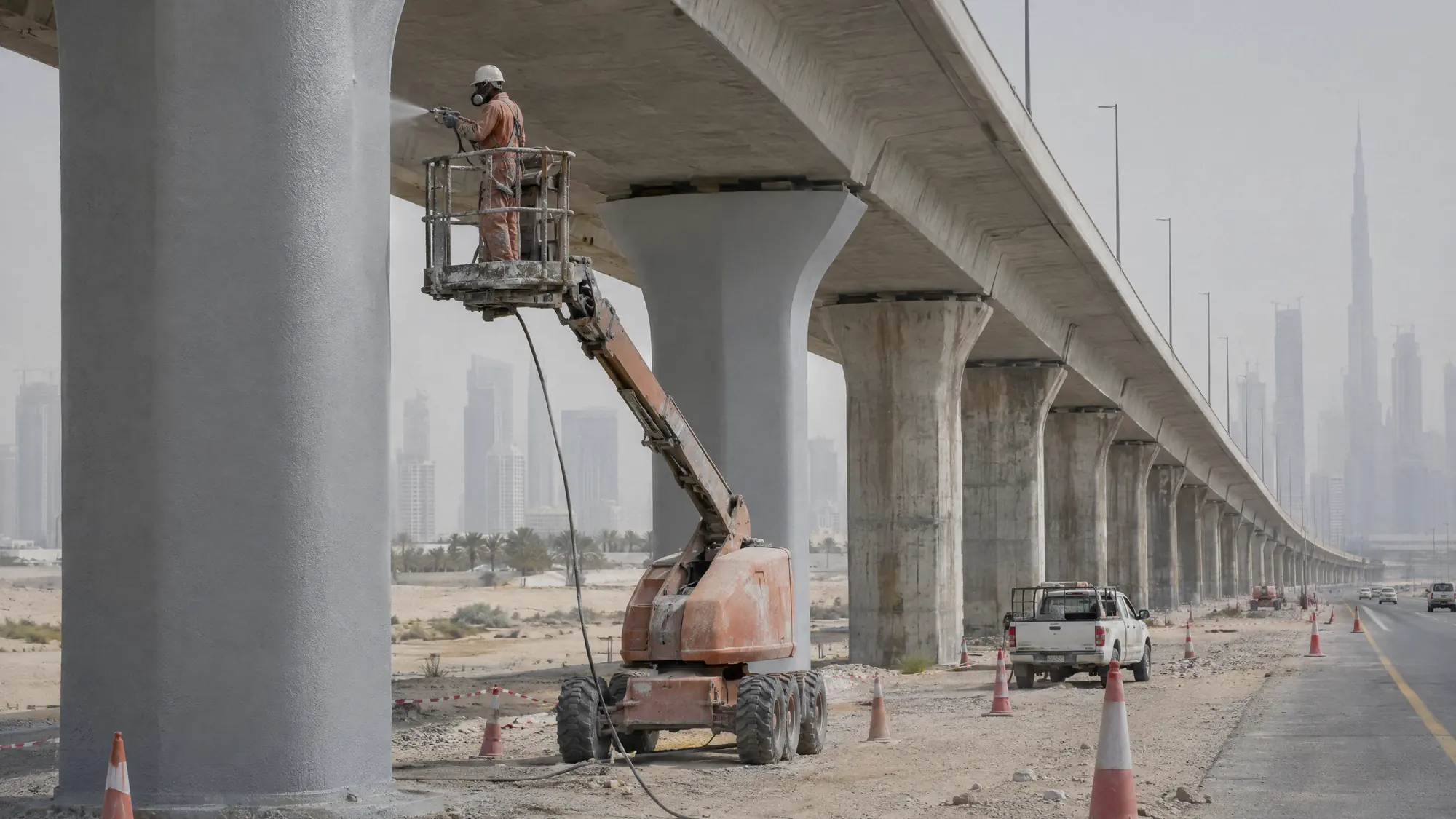
- Bridges & flyovers
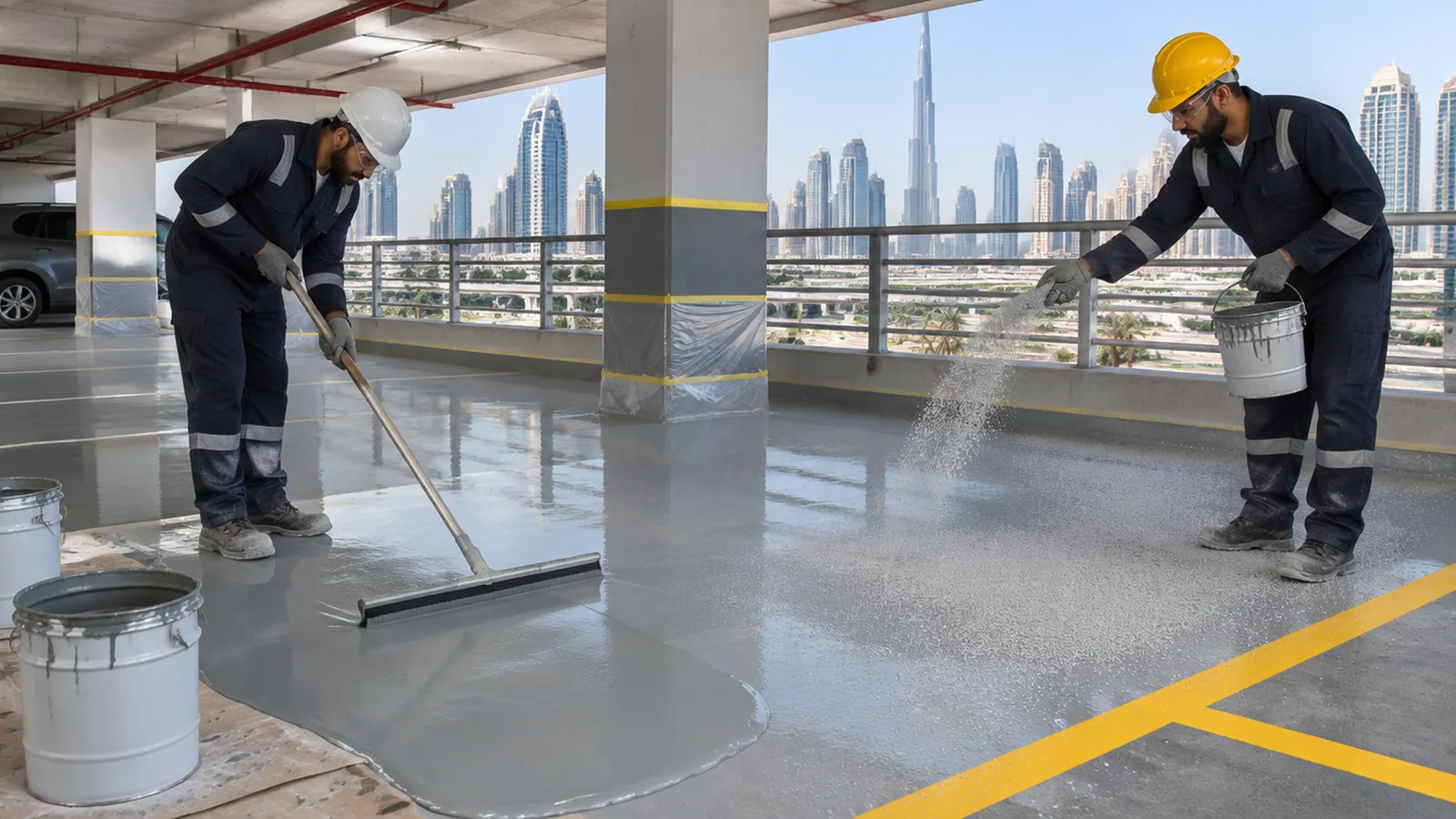
- Car park ramps & decks
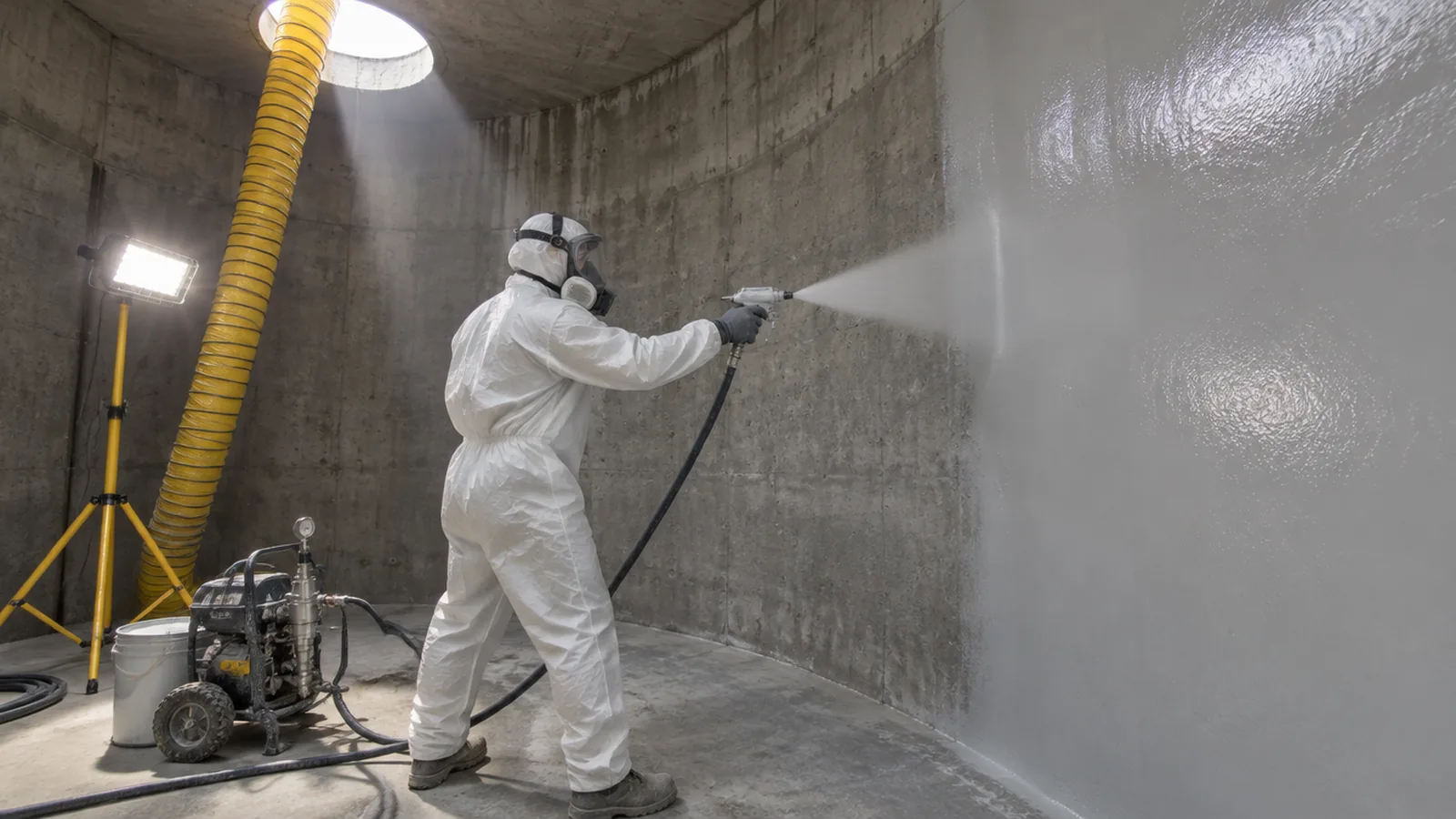
- Reservoirs & tanks
- Quay walls
- Building frames
Approved by RTA · DEWA · Dubai Municipality · DOT Abu Dhabi
Repairs that last start with the cause
Spalling, cracking and rust staining are symptoms. The usual cause is corrosion of the reinforcement, driven by carbonation or chlorides, but movement, overloading and failed joints play their part too. A patch that ignores the cause tends to fail again around its edges.
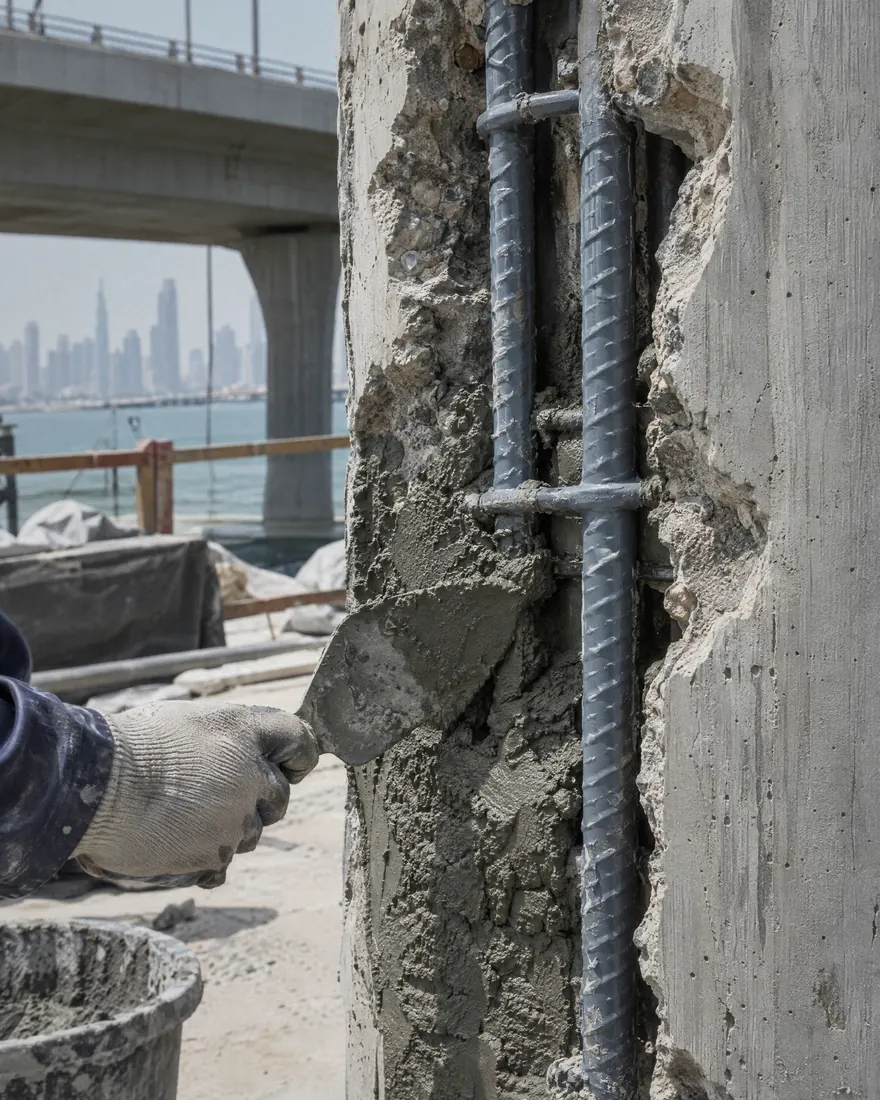
Our repairs follow a set sequence: remove all damaged and contaminated concrete, clean and treat the steel, then rebuild the section with a repair mortar matched to the structure and exposure, finished with a protective coat.
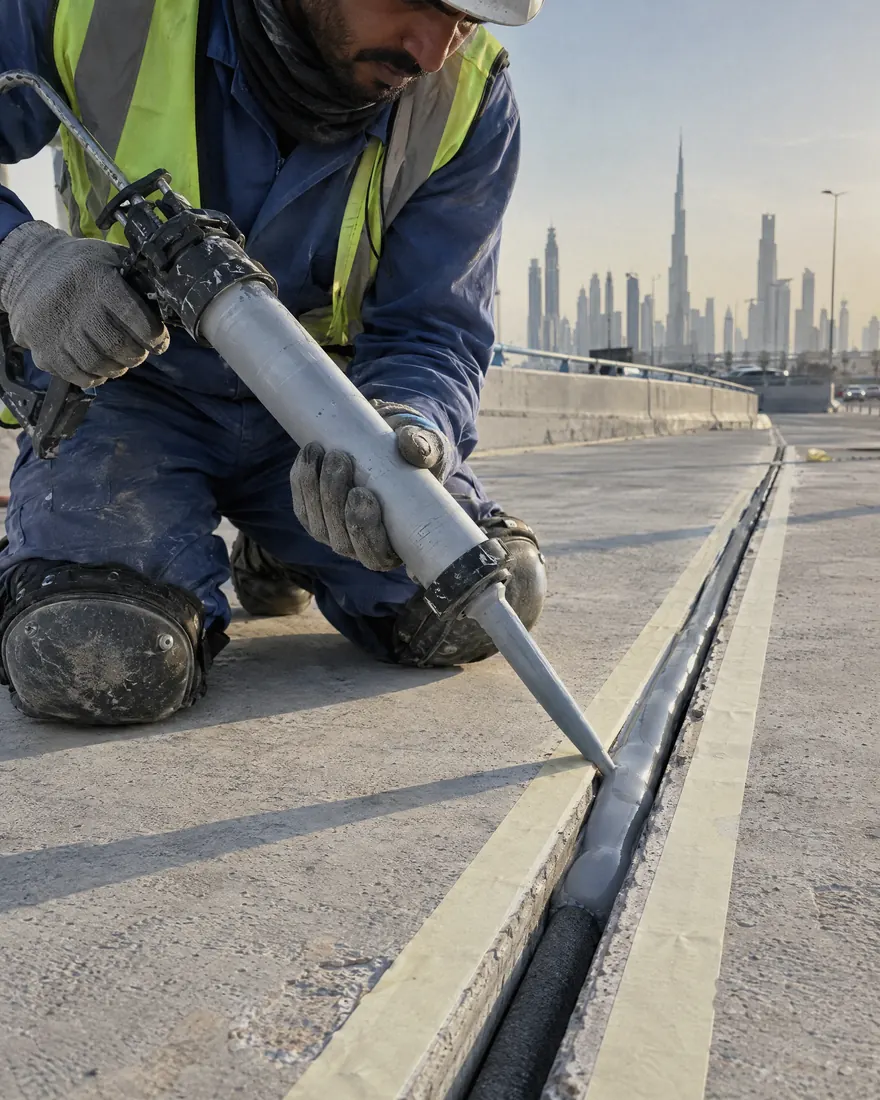
Where a member needs more capacity, we add externally bonded carbon-fibre (CFRP) plates or wraps. Expansion and construction joints are cleaned out and resealed so water and chlorides stop getting in.
- 01
Treats the cause
Survey and testing first, so the repair targets what is actually failing.
- 02
Steel protected
Corroded bars are cleaned to bright metal and primed before rebuilding.
- 03
Strength restored
Section rebuilt, and CFRP strengthening where extra capacity is needed.
- 04
Watertight joints
Joints resealed to stop water and chlorides reaching the structure.
From spalling to sound concrete
- Chlorides
- CO₂
- Water
- 01AttackChlorides and carbonation reach the reinforcement through the cover concrete.
- 02CorrosionThe steel rusts, expands and cracks the concrete around it, until it spalls.
- 03RepairedBroken out, steel treated, section rebuilt and sealed, then protected.
The system
- Protective coating
- Fairing coat
- Repair mortar
- Rebar primer
How we repair it
Survey, preparation, application and inspection by one accountable Unimag team.
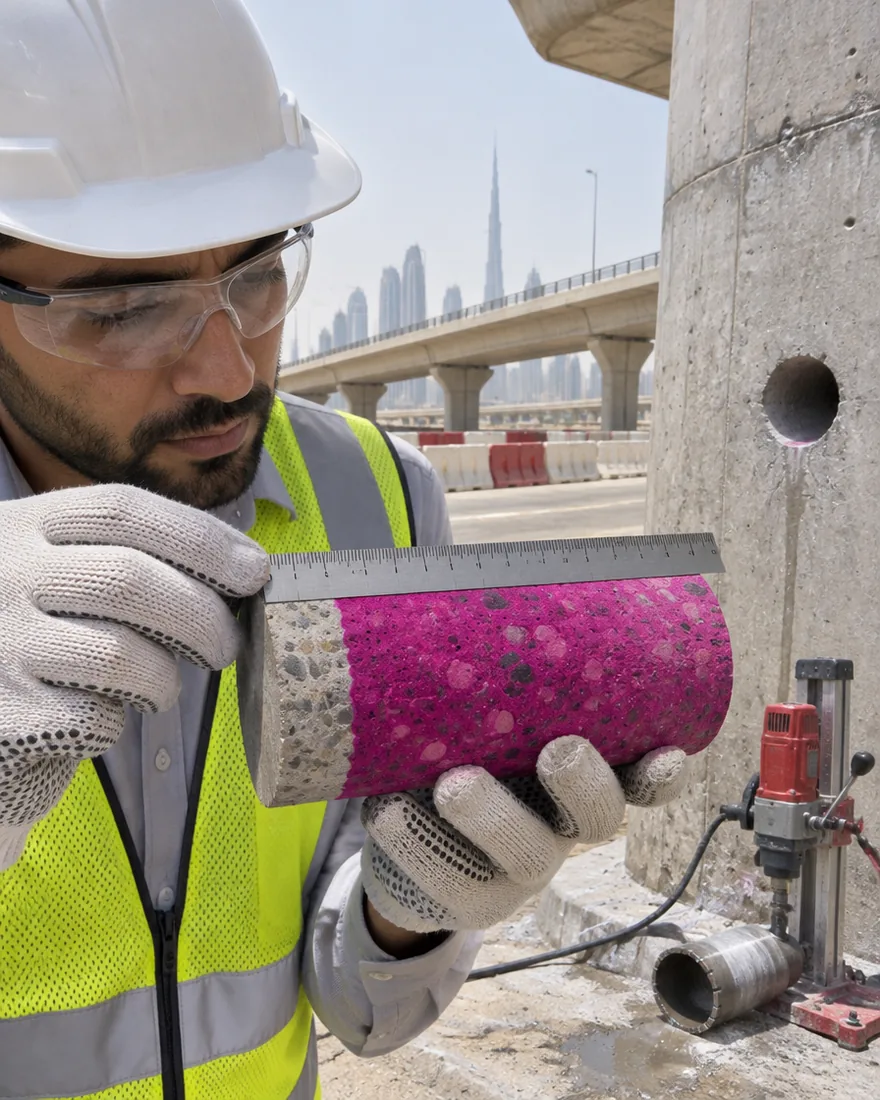 01
Condition survey
Visual and hammer-tap survey, cover and carbonation testing and chloride sampling to map every defective area and its cause.
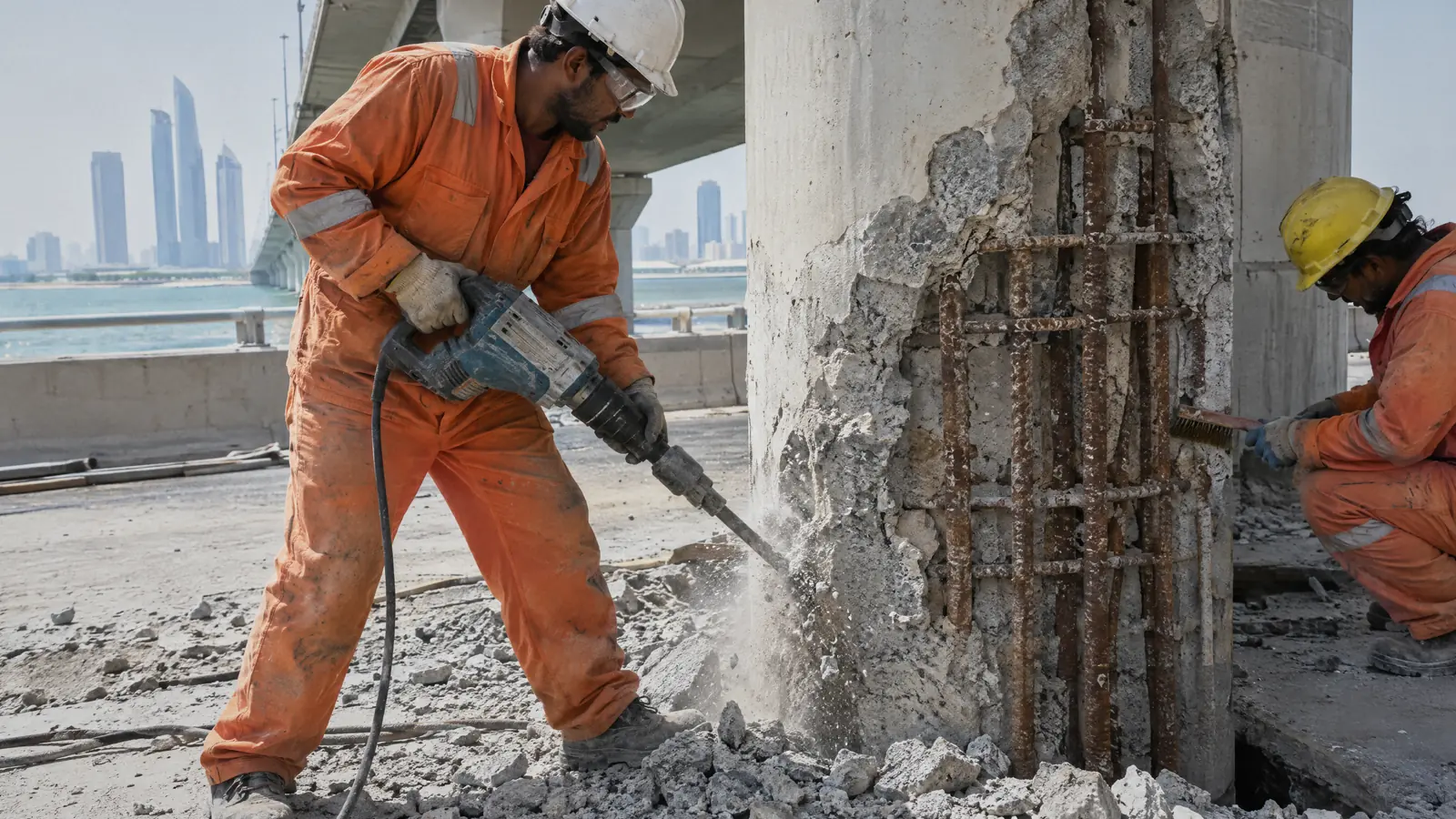 02
Break-out
Damaged and contaminated concrete is removed to behind the reinforcement, with square, sound edges for the repair.
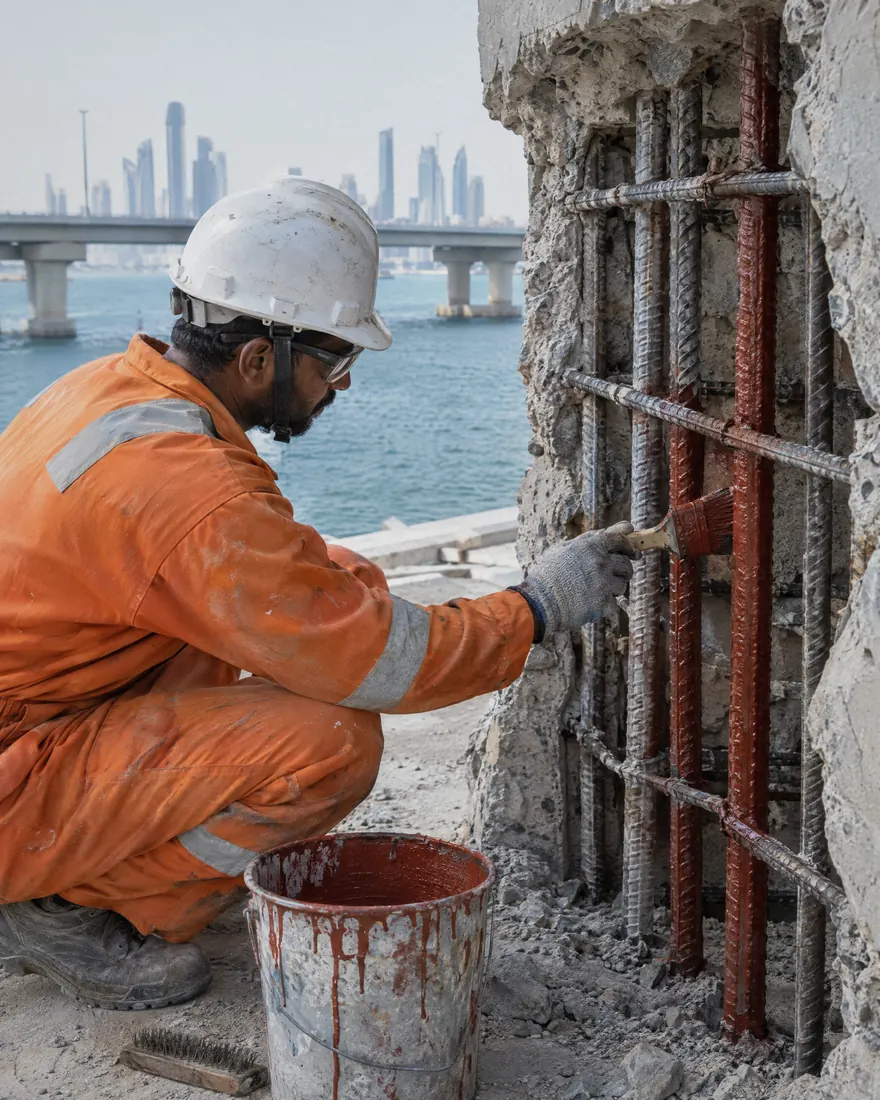 03
Steel treatment
Reinforcement is cleaned of rust and coated with an anti-corrosion primer; badly corroded bars are supplemented.
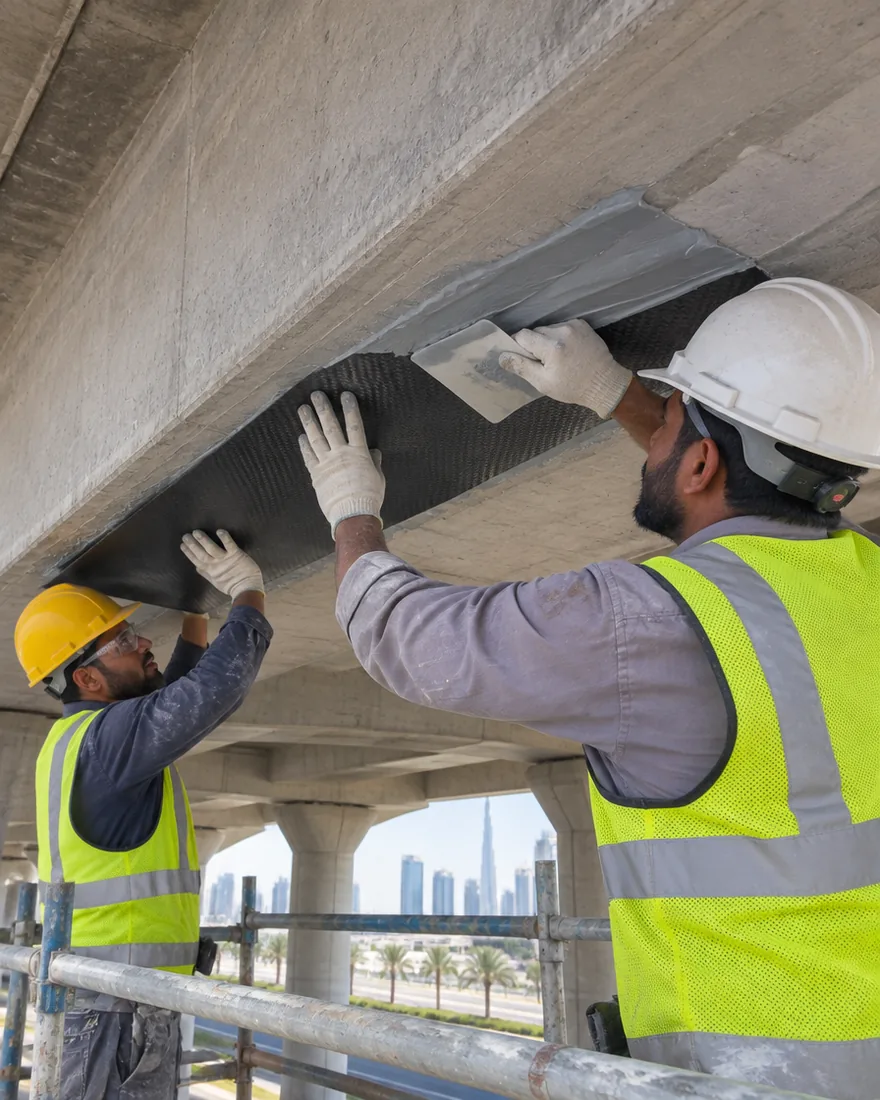 04
Rebuild & strengthen
The section is rebuilt with repair mortar or micro-concrete, and CFRP is bonded on where strengthening is specified.
 05
Seal & protect
Joints are resealed and the repaired area is coated so it does not become the next weak point.
Typical build-up
- Protective coatingSeals the repaired surface
- Fairing / levelling coatSmooth, closed surface finish
- Repair mortarRebuilds the concrete section
- Rebar primerAnti-corrosion coat on cleaned steel
- Sound concreteDamaged material removed
Typical system shown. Every system is specified per project to the manufacturer's data sheet.
Where we apply it
Typical structures across the UAE that need this protection.
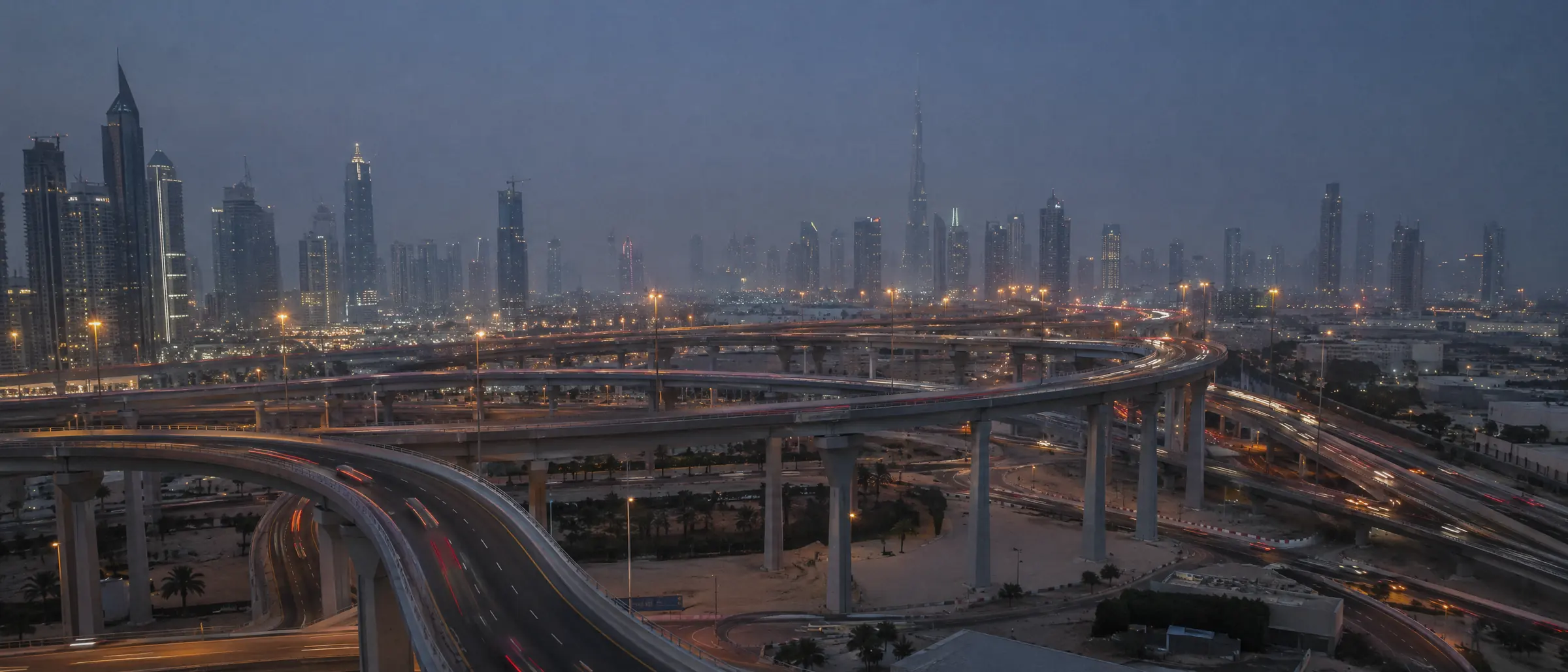
Bridges & flyovers
Piers, crossheads, bearings shelves and deck edges.

Car park structures
Ramps, decks, columns and expansion joints.

Water structures
Reservoirs, tanks and pump stations.
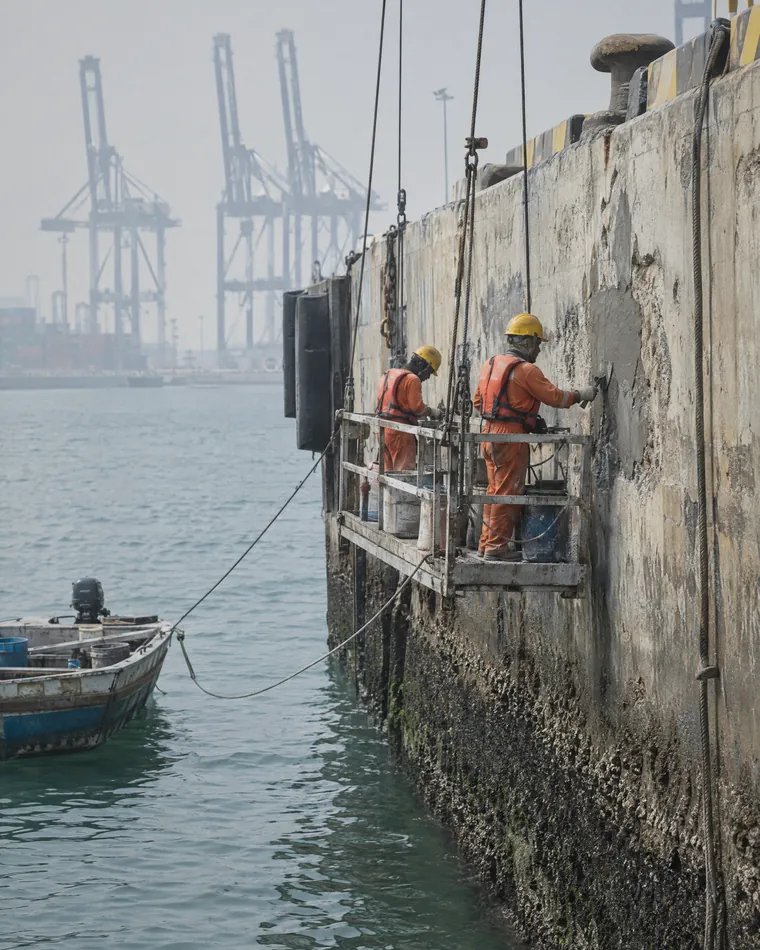
Marine structures
Quay walls and splash zones.
Related projects
Work from Unimag's project record. Photos are illustrative until project photography is added.
All projects