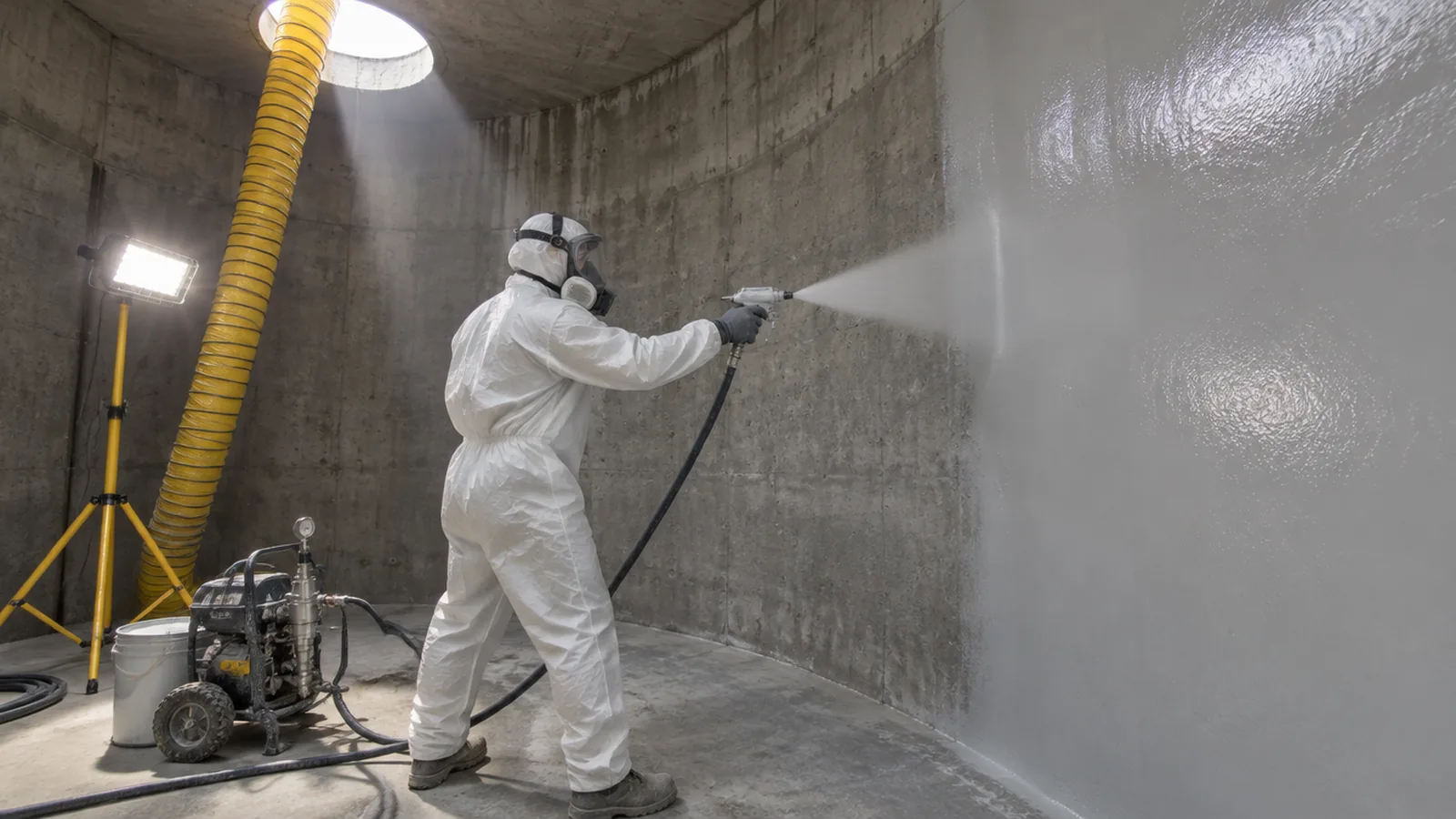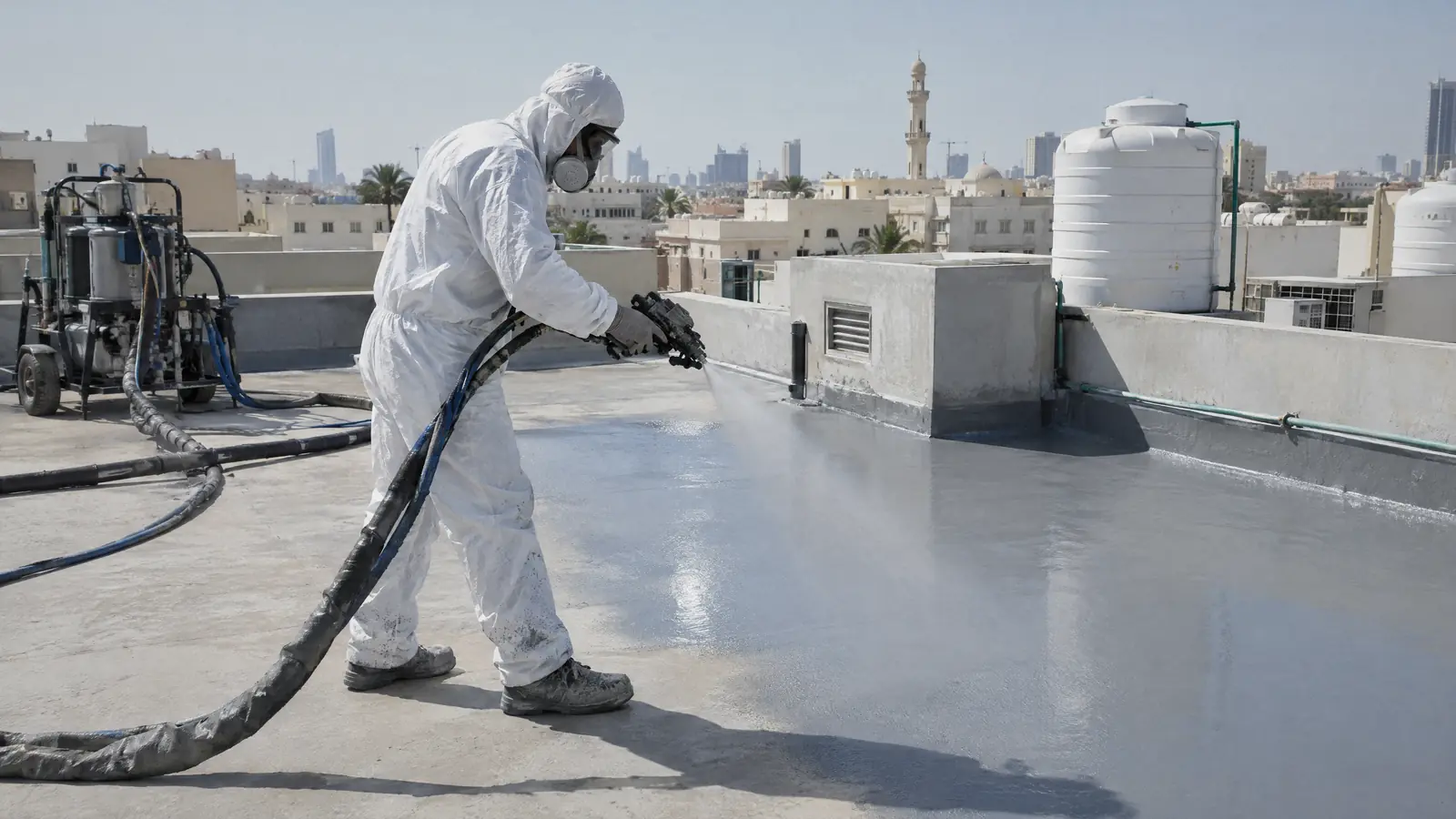

Exposed concrete protection & anti-carbonation coatings
Coating systems that keep carbon dioxide, chlorides, moisture and UV out of the concrete and away from the steel inside it, on bridges, flyovers, car parks and facades across the UAE.
- Bridges & flyovers
- Underpasses & tunnels
- Car park structures
- Facades & parapets
- Marine & port structures
Approved by RTA · DEWA · Dubai Municipality · DOT Abu Dhabi
Why exposed concrete needs protecting
Concrete protects its steel reinforcement chemically: its high alkalinity keeps the steel passive. Over time carbon dioxide from the air reacts with the cement paste and lowers that alkalinity. When this carbonation front reaches the reinforcement, the steel starts to corrode.
In the UAE the process is helped along by heat, humidity, airborne salts and wide temperature swings. Corroding steel expands, cracks the cover concrete and eventually spalls it off, which is costly to repair and can affect the structure.
An anti-carbonation coating stops this at the surface. It is a barrier to carbon dioxide and chlorides, yet lets water vapour escape so the concrete can breathe. Elastomeric grades also bridge fine cracks, and the finish gives the structure a clean, uniform colour.
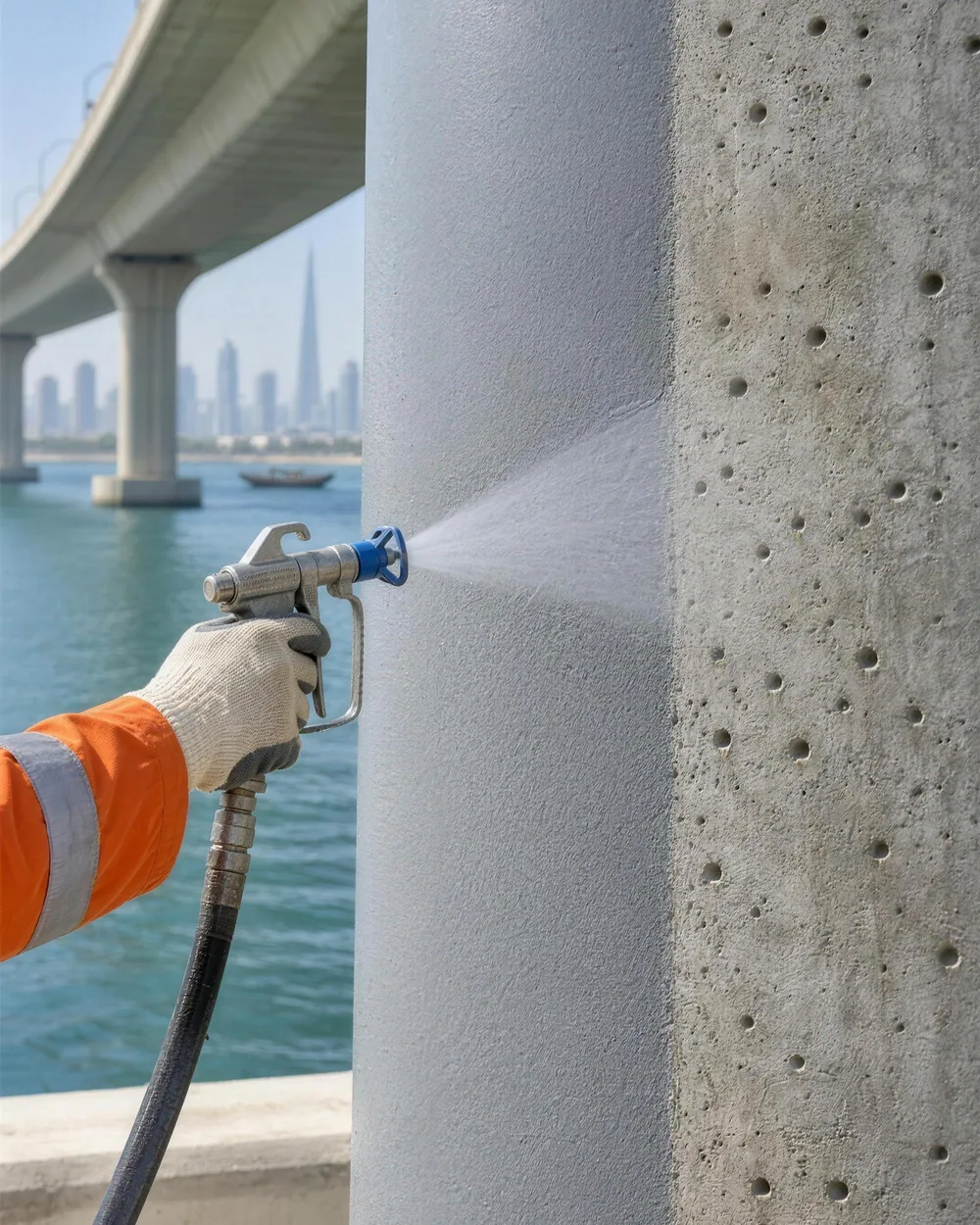
- 01
Blocks CO₂ and chlorides
Slows carbonation and chloride ingress, the two main causes of rebar corrosion.
- 02
Lets the concrete breathe
Vapour-permeable, so moisture inside the concrete is not trapped behind the coating.
- 03
Bridges fine cracks
Elastomeric systems stay flexible through the UAE's daily temperature swings.
- 04
Uniform, UV-stable finish
One consistent colour across repaired and original concrete.
What the coating actually stops
- CO₂
- Chlorides
- Moisture
- 01ExposedCarbon dioxide, airborne chlorides and moisture work their way into bare concrete every day.
- 02CorrosionThe carbonation front (grey) moves through the alkaline concrete (pink) until it reaches the steel, which starts to rust.
- 03ProtectedRepaired, primed and coated: the system keeps the threats out while the concrete still breathes.
The system
- Topcoat
- Anti-carbonation coat
- Primer / sealer
- Levelling mortar
How we apply it
Survey, preparation, application and inspection by one accountable Unimag team.
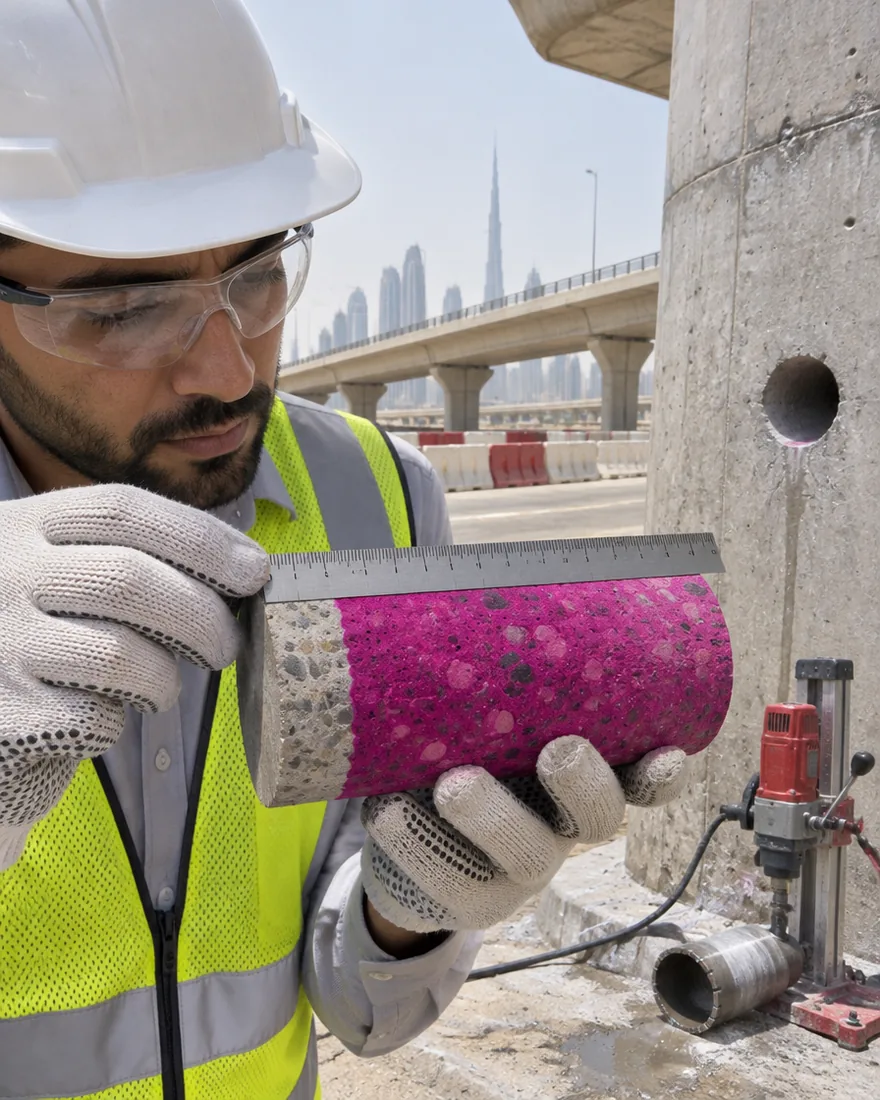 01
Survey & testing
We measure carbonation depth, concrete cover and chloride content, and map cracks, spalls and stains, so the system fits the actual condition of the structure.
 02
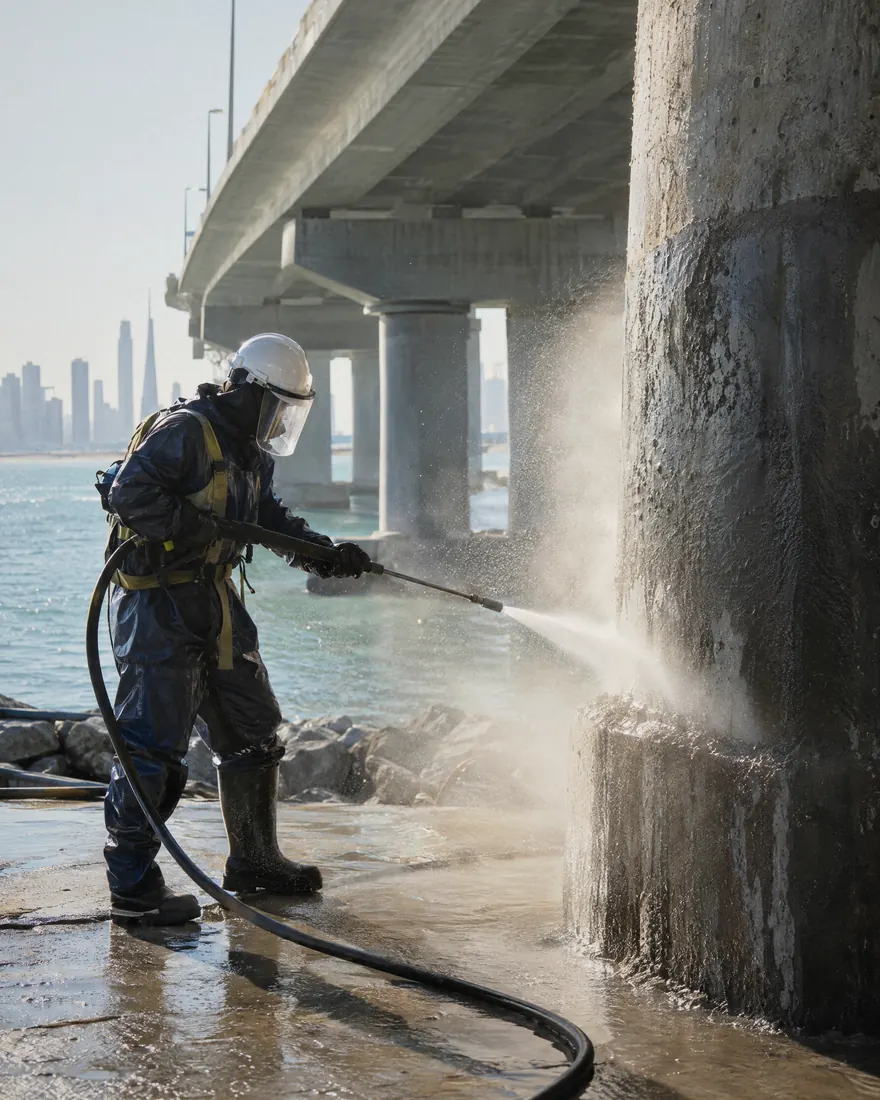
Surface preparation
Laitance, dirt, old coatings and loose material are removed, typically by high-pressure water jetting or abrasive cleaning, to give a sound, open surface.
 03
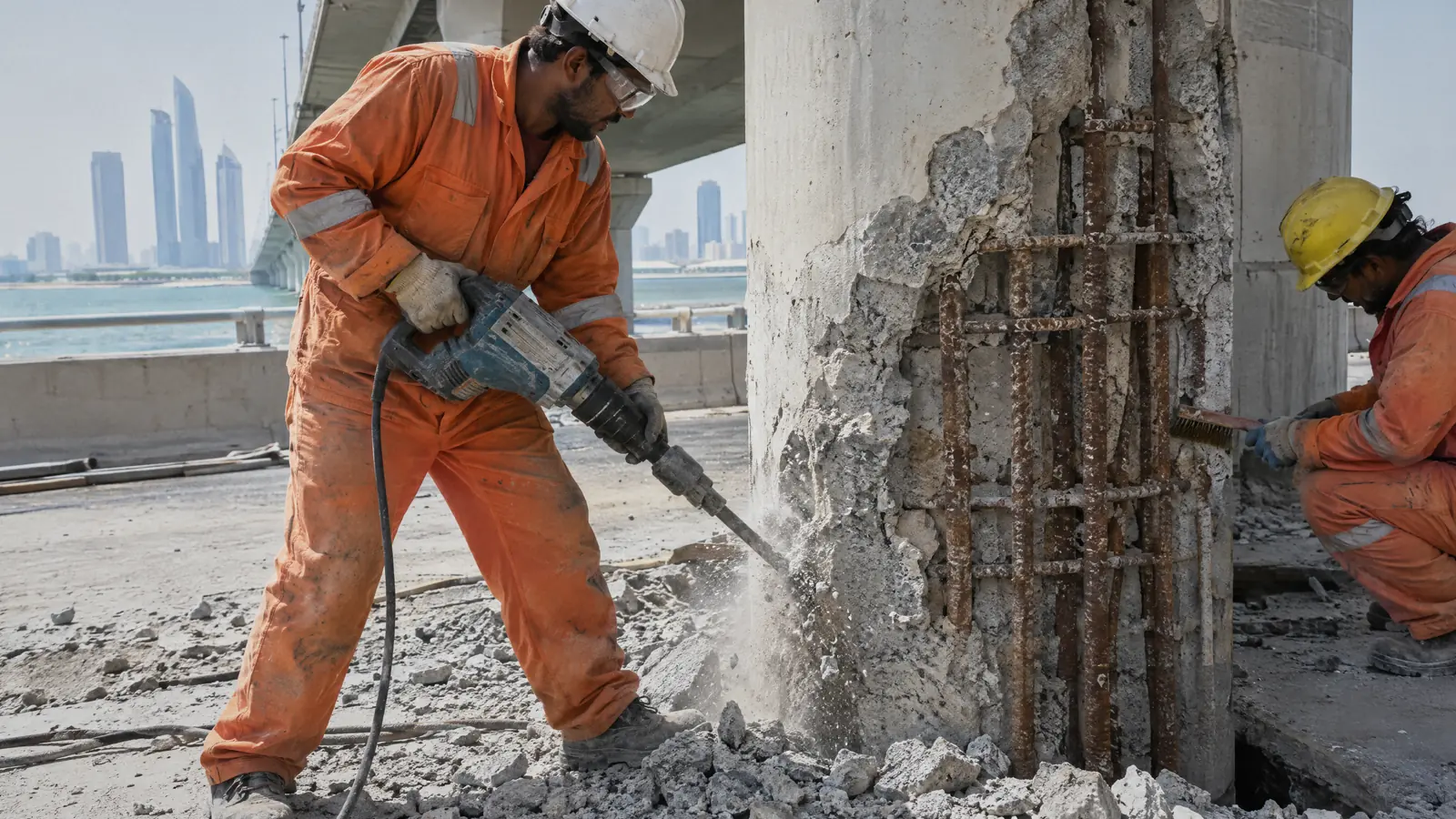
Concrete repair
Damaged areas are broken out, corroded steel is cleaned and primed, and the section is rebuilt with repair mortar. Blowholes are filled with a levelling coat.
 04
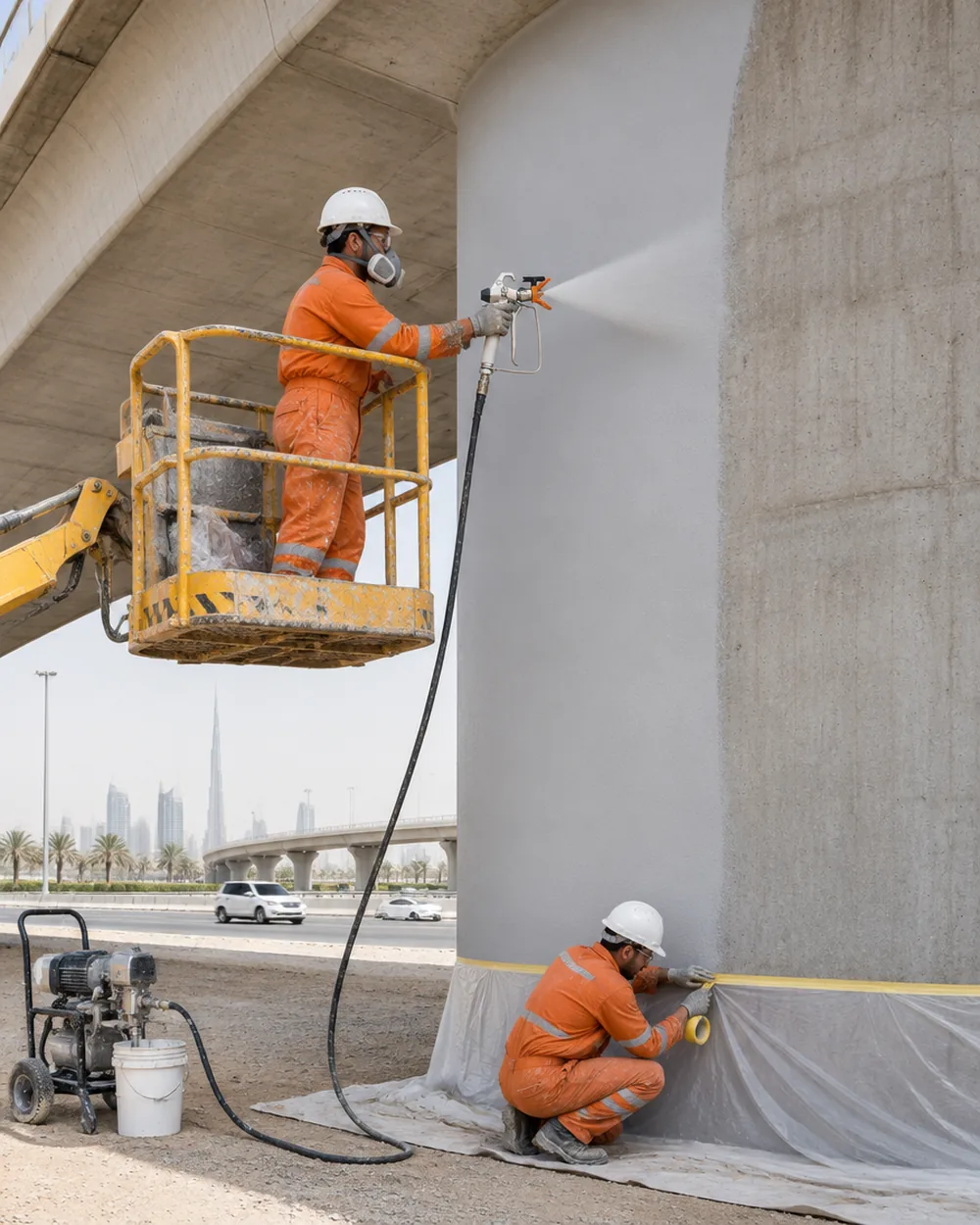
Primer & coating system
A primer or penetrating sealer is applied, followed by the anti-carbonation coating, usually in two coats, to the thickness on the manufacturer's data sheet.
 05
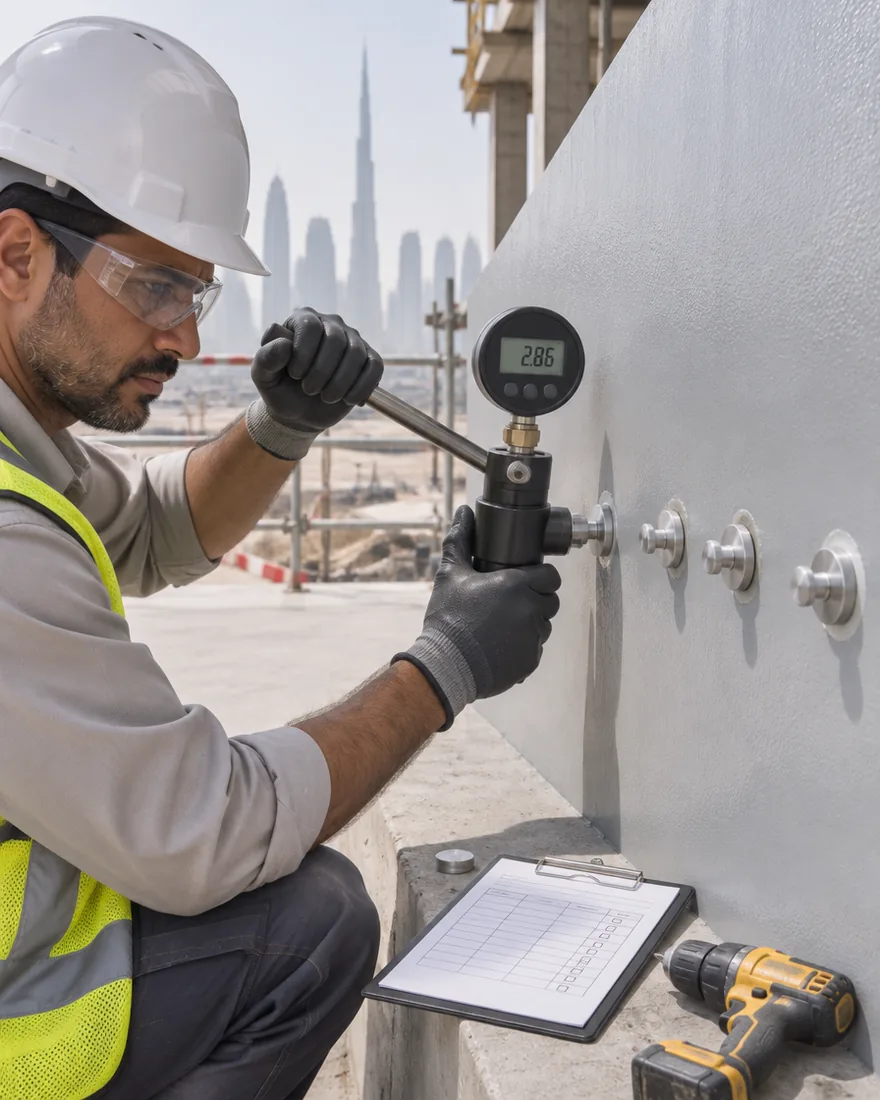
Inspection & handover
Dry film thickness and adhesion are checked and recorded, and the inspection records and warranty documents are handed over at completion.
Typical build-up
- Topcoat / second coatUV-stable finish in the specified colour
- Anti-carbonation coatBarrier to CO₂ and chlorides, vapour-permeable
- Primer / sealerConsolidates the surface and bonds the system
- Levelling & repair mortarFills blowholes, rebuilds damaged areas
- Prepared concreteTested, cleaned and repaired substrate
Typical system shown. Every system is specified per project to the manufacturer's data sheet.
Where we apply it
Typical structures across the UAE that need this protection.
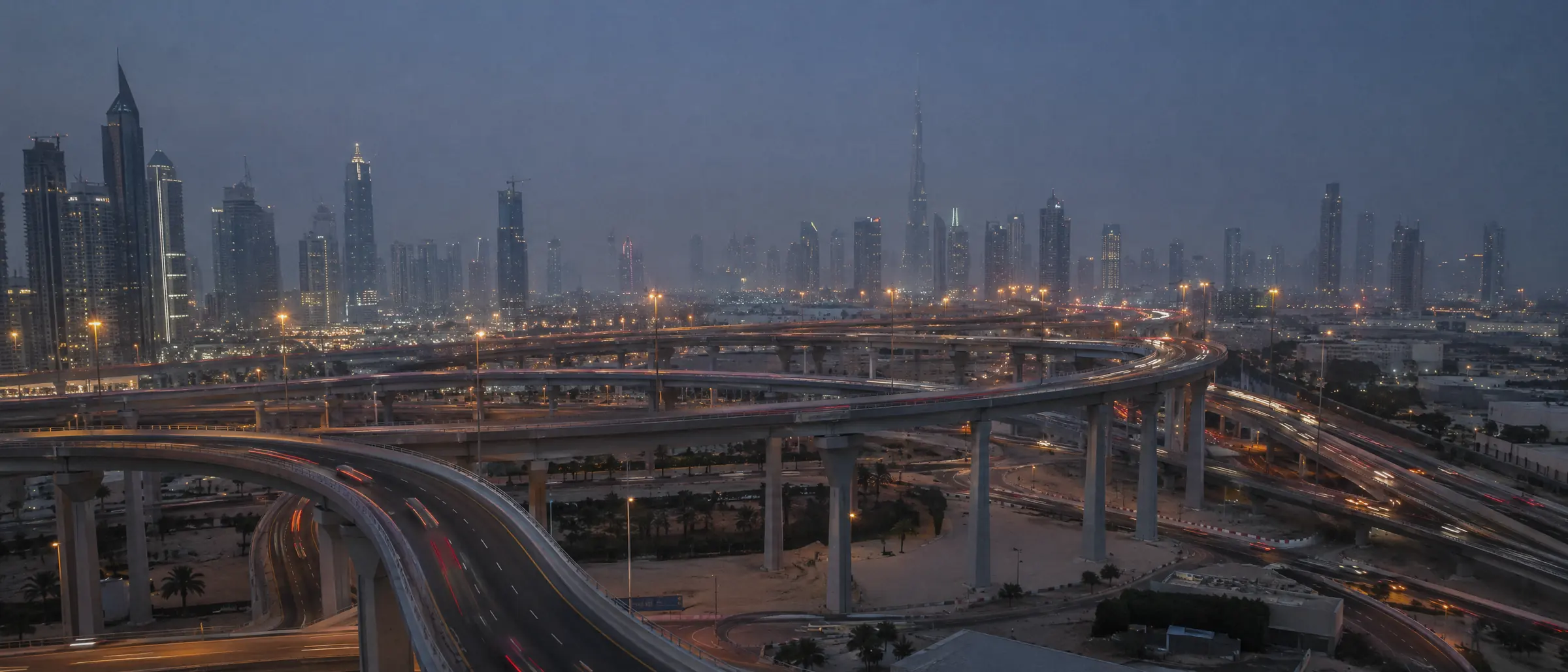
Bridges & flyovers
Piers, crossheads, deck soffits and parapets on road and rail structures.
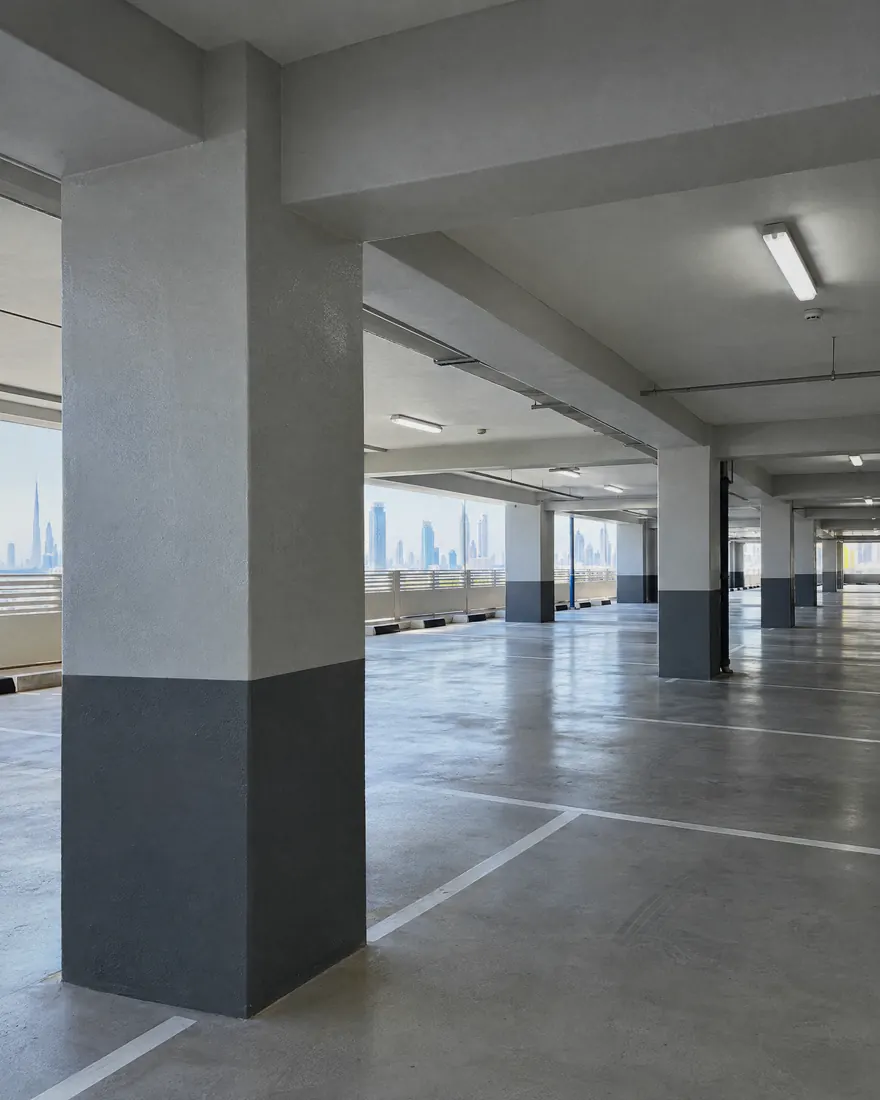
Car park structures
Columns, soffits and walls exposed to exhaust gases and humidity.
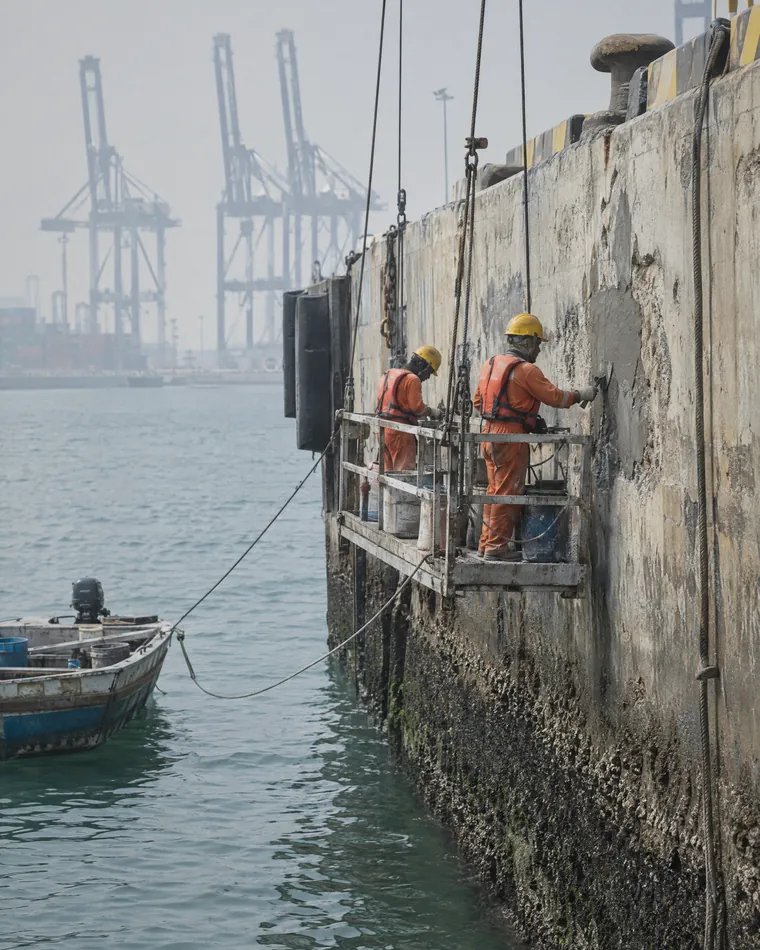
Marine & port structures
Quay walls and splash zones exposed to chlorides and wet-dry cycles.
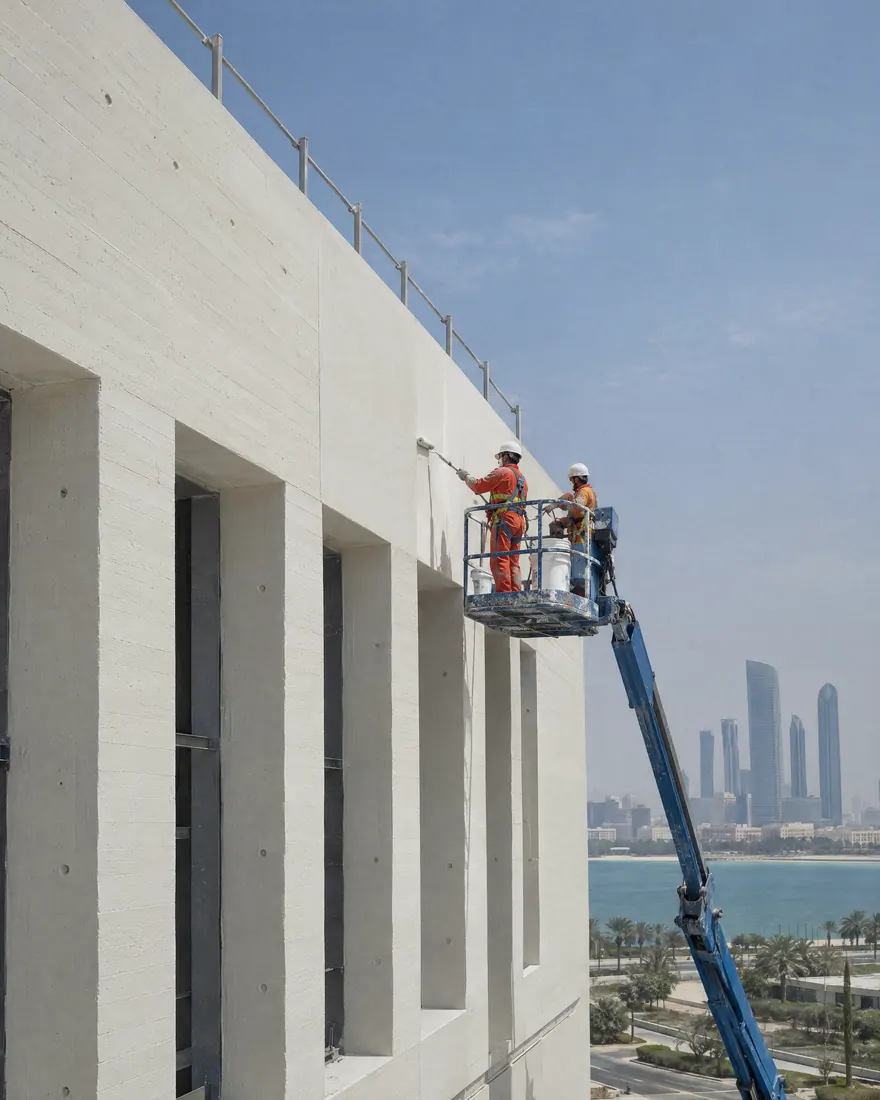
Facades & parapets
Exposed concrete facades, parapets and architectural elements.
Related projects
Work from Unimag's project record. Photos are illustrative until project photography is added.
All projects